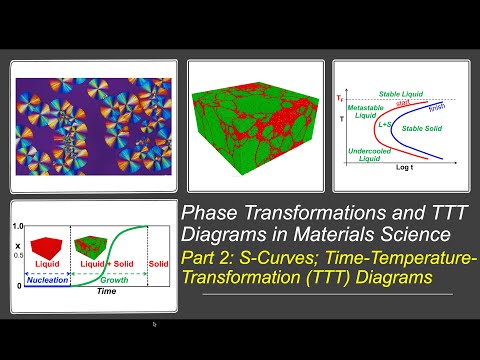
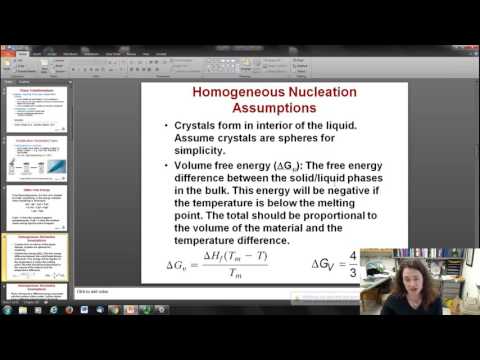
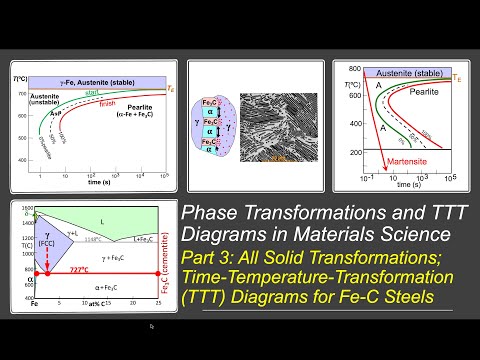
The transformation of materials into different phases plays a pivotal role in determining their properties, applications, and overall performance. But how do these phase transformations occur? How long do they take? And how can they be controlled to produce specific microstructures? In this three-part tutorial series, we explore the fascinating world of phase transformations. Using real-world examples like liquid solidification, glass formation, and transformations in Fe-C steels, we’ll dive into the mechanisms behind phase changes. You’ll learn about the crucial role of nucleation and growth, how these processes depend on the degree of undercooling, and how to use TTT diagrams to map the transformation path as a function of temperature and time. Tailored for sophomore-level undergraduate students in Materials Science and Engineering (or related fields), this tutorial assumes a basic understanding of introductory thermodynamics. In this first video, we’ll introduce the fundamental concepts of phase transformations and why they occur in the first place. Focusing on the solidification of a liquid, we’ll explain the processes of nucleation and growth. You’ll also discover how undercooling influences the rate of transformation and ultimately shapes the final microstructure of the solid.
- 793Просмотров
- 10 месяцев назадОпубликованоPeter Davies
Phase Transformations and TTT Diagrams in Materials Science (Part 1: Nucleation & Growth; Rates)
Похожее видео








Популярное
Новини