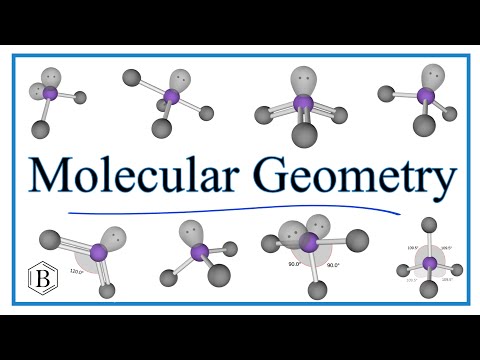
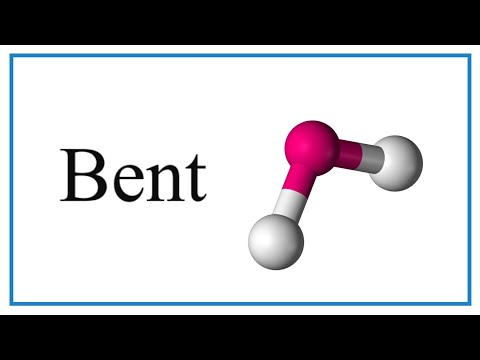
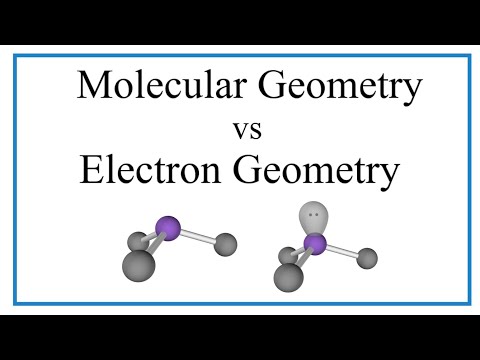
In this video we’ll look at the T-Shaped Molecular Geometry and Bond Angles. We'll use the example of ClF3 to understand the molecular shape. To do that we'll use VSEPR Theory and the Lewis Structure for ClF3 and then use interactive models and visualization to visualize the T-Shaped geometry. The T-Shaped molecular shape occurs when there are three atoms attached to the central atom and two lone pairs (unbonded pairs) of electrons on the central atom. ClF3 is a good example of a T-Shaped molecular geometry. It is useful to understand the generic molecular geometry and then apply it to specific molecules using either the steric number and number of lone pairs of electrons or the AXE notation. For the more on the molecular geometries below see my video at: - Linear - Bent (90 and 120-degree bond angles) - Trigonal Planer - Trigonal Pyramidal - Tetrahedral - Trigonal Bipyramidal - Octahedral The role of lone pairs (unbonded electron pairs) and their VSEPR influence on molecule shape will also be addressed in the video. Get more chemistry help at Molecular Shapes done with PhET's free online website: More info on the T-shaped molecular geometry at: Drawing/writing done in InkScape. Screen capture done with Camtasia Studio 4.0. Done on a Dell Dimension laptop computer with a Wacom digital tablet (Bamboo).
- 12852Просмотров
- 3 года назадОпубликованоWayne Breslyn (Dr. B.)
T-Shaped Molecular Geometry/Shape and Bond Angles
Похожее видео




Популярное
Новини