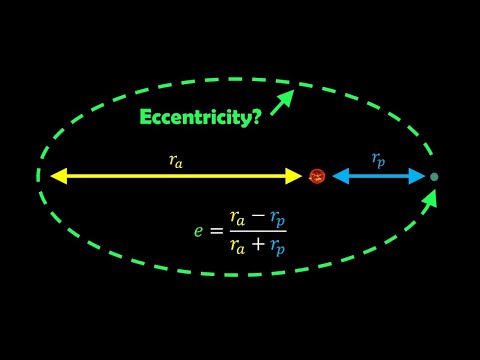
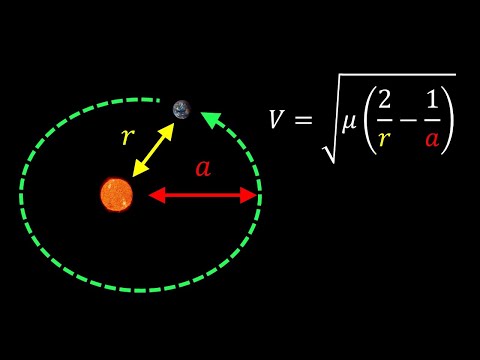
Help support this channel on Patreon: Join this channel to get access to perks: Welcome, my name is Phil, and in this video I explain how you can calculate the semi-major axis of an orbit. To calculate the semi-major axis of an orbit, particularly in astronomy when considering orbits of planets or other celestial bodies around a star, you need to know a few key pieces of information and use Kepler's Third Law of Planetary Motion. The basic formulation you use depends on the specific details you have about the orbit. If You Know the Orbital Period and Mass of the Central Body For a planet orbiting a star (or for any satellite orbiting a central body), you can calculate the semi-major axis (a) of the elliptical orbit using a simplified version of Kepler's Third Law if the mass of the orbiting body is much less than the mass of the central body. Kepler's Law states that the square of the orbital period is proportional to the cube of the semi-major axis. If you don't have the orbital period or the mass of the central body but have other orbital parameters (like the apoapsis and periapsis distances) you can still calculate the semi-major axis. Here, you add to the apoapsis and periapsis distances and half to get the semi-major axis.
- 7939Просмотров
- 1 год назадОпубликованоAstroPhil
How to calculate the semi-major axis of an orbit
Похожее видео







Популярное
Новини