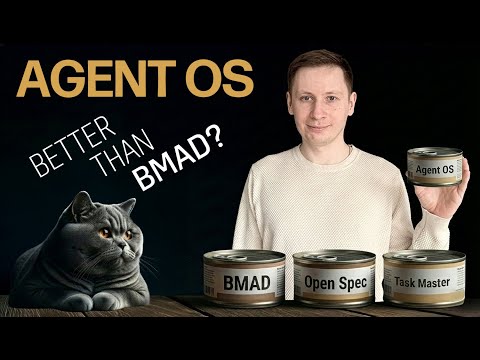
Just typing vague prompts at an AI chatbot, or "vibe-coding," is a dead end for any serious software project. It leads to poor output, lost context, and unmaintainable code. A new wave of structured AI development **methodologies** is here to fix that. But are they any good? I decided to find out. I took one project—building a landing page for The Gray Cat channel with , Tailwind, and three live API integrations—and built it three separate times using three competing **approaches**: the heavyweight BMAD method, GitHub’s Spek Kit, and the fast-moving Open Spec. The results were shocking: one took eight hours, and another took just seven minutes. In this video, I break down the entire process for all three **approaches**: the setup, the philosophy, the painful, slow parts, and the final results. By the end, you'll know exactly which one is right for your project and which one might be a colossal waste of time. *[ LINKS ]* - *BMAD:* [ ]( ) - *GitHub Spek Kit:* [ ]( ) - *OpenSpec:* [ ]( ) *[ TIMECODES ]* - 00:00 - Intro: The Problem with "Vibe-Coding" - 01:10 - The Project & Tech Stack - 02:09 - Method 1: The BMAD Beast (8 Hours) - 04:02 - Method 2: GitHub's Spek Kit (Under 2 Hours) - 05:47 - Method 3: The Open Spec Speedrun (7 Minutes) - 07:28 - Head-to-Head Comparison - 08:55 - Conclusion: Which One Should You Use? - 10:44 - Outro --- The Gray Cat: Where AI meets code. Your essential guide to building next-generation software with modern AI tooling. Master AI IDEs, structured development, and practical AI app development. Welcome to the future of coding.
- 48126Просмотров
- 1 месяц назадОпубликованоThe Gray Cat
BMAD vs. Spek Kit vs. Open Spec: Which AI Coding Methodology is Best?
Похожее видео


Популярное
Новини