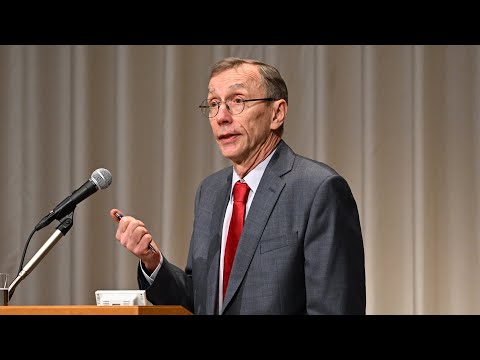
What does ancient DNA reveal about who we are today? Nobel Prize–winning geneticist Svante Pääbo joins the Museum of Science to explore the astonishing story written in our genomes, one that traces modern humans back through time to Neanderthals, Denisovans, and long-lost relatives who still live on in our DNA. From sequencing the first Neanderthal genome to discovering new branches of the human family tree, Pääbo’s groundbreaking work shows that human evolution was anything but a straight line. In this in-depth conversation, Pääbo unpacks how ancient interbreeding shaped our biology, health, and migration patterns. We also discuss why his discoveries challenge what we thought we knew about being human. You'll hear about the tools of paleogenetics, the ethics of ancient DNA research, and how fragments of extinct hominin DNA can influence traits like disease resistance, pain sensitivity, and even our immune response to viruses like COVID-19. This is a powerful look at the science that connects our past and present. #AncientDNA #HumanEvolution #Genetics #ScienceCommunication #STEM #YouTube Chapters: 00:00 – The Call 01:30 – Ancient DNA 04:30 – Neanderthals 08:00 – Denisovans 11:30 – Mixed Ancestry 15:00 – Life in the Caves 19:00 – Reconstructing the Genome 23:00 – DNA Preservation 27:00 – Contamination & Controls 31:00 – Functional Genetics 36:00 – Health Impacts 42:00 – What Makes Us Human 48:00 – Legacy & What’s Next The Big Question with the Museum of Science: The Big Question Podcast with the Museum of Science: Being Human with the Museum of Science: Svante Pääbo is a Nobel Prize–winning geneticist who pioneered the field of paleogenetics. As the founding director of the Max Planck Institute for Evolutionary Anthropology, he led the team that successfully sequenced the Neanderthal genome — a breakthrough that revealed modern humans still carry DNA from Neanderthals and Denisovans. With a career that bridges genetics, anthropology, and evolutionary biology, Pääbo has transformed how we understand human origins, identity, and adaptation. His work has uncovered genetic links to disease resistance, brain function, and pain perception, showing how ancient DNA continues to shape our lives today. Through decades of meticulous research and innovation, he remains a leading voice in decoding what makes us uniquely human. Among the world's largest science centers, the Museum of Science engages millions of people each year to the wonders of science and technology through interactive exhibitions, digital programs, giant screen productions, and preK – 12 EiE® STEM curricula through the William and Charlotte Bloomberg Science Education Center. Established in 1830, the Museum is home to such iconic experiences as the Theater of Electricity, the Charles Hayden Planetarium, and the Mugar Omni Theater. Around the world, the Museum is known for digital experiences such as Mission: Mars on Roblox, and traveling exhibitions such as the Science Behind Pixar. Learn more at Copyright © 2025. Museum of Science. All rights reserved. This video is owned by the Museum of Science and may not be reproduced, redistributed, or used in any manner without prior written permission from the Museum of Science.
- 84690Просмотров
- 2 месяца назадОпубликованоMuseum of Science
You Carry Ancient DNA: Here’s What It Reveals About You
Похожее видео



Популярное
Новини