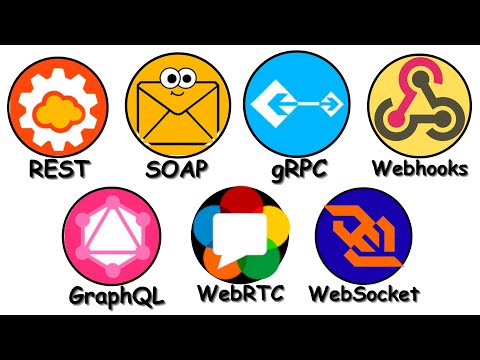
#webrtc #api #coding In this video, we explore WebRTC, a technology enabling direct peer-to-peer communication between clients. Unlike WebSocket, which relies on a server to relay messages, WebRTC allows direct data exchange between clients, reducing server load and improving performance, especially for real-time audio and video communication. To establish a peer-to-peer connection, WebRTC uses a process called signaling through a server, employing protocols like SDP to agree on communication parameters. Signaling helps clients exchange necessary network information, including ICE candidates that represent potential communication paths. ICE candidates come in three types: Host Candidates for local networks, Server Reflexive Candidates for clients behind NAT, and Relay Candidates using TURN servers for complex network environments. Clients use STUN servers to discover their public IP addresses and port numbers, while TURN servers relay communication when direct connection is not feasible. WebRTC employs protocols like SRTP for real-time video/audio transmission, prioritizing speed and capacity over reliability. For reliable data transfer, like file sharing, SCTP is used, ensuring data integrity. WebRTC is accessible via APIs in modern browsers and libraries for other platforms, offering encrypted communication and high compatibility. However, it may require TURN servers for certain network conditions and additional technologies like SFU or MCU for many-to-many communication. In the next video, we will discuss Message Brokers as another method of message exchange. See you then!
- 3397Просмотров
- 1 год назадОпубликованоCoding with Yalco
WebRTC - The method of direct communication between clients
Похожее видео









Популярное
Новини