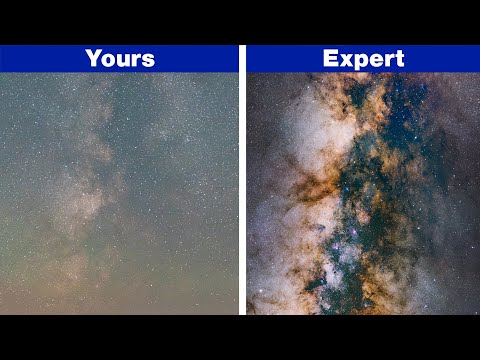
I've been making videos about signal to noise ratio. I even have a free app that you can use to estimate it! But what does a good signal to noise ratio look like? The results may surprise you! For those interested, here is the gear I use (or equivalent; Orion has discontinued some of their products, so the equivalent skywatcher products are listed). Most of the links are Amazon Affiliate links. Thanks! From Amazon: Skywatcher HEQ5 Mount Skywatcher 80mm F7.5 Doublet ZWO EFW mini filter wheel Optolong LRGB Filter Set ( ") Orion Reducer USB RJ45 Cable for Controlling Mount Raspberry Pi to control mount R Pi case with touch screen ZWO Autofocuser From Agena Astro: ZWO 294MM Pro Camera: HEQ5 Mount: (mine is Orion Sirius, which is equivalent) ZWO Filter Wheel: Optolong Filters (LRGB, SII, Ha, OIII): (the Ha and OIII narrowband filters are better than what I have) Skywatcher Evostar 80mm: (equivalent lens) USB RJ45 Cable: (connects mount to laptop directly; mine is a different brand, but this should do) ZWO Autofocuser: Reducer: (mine is Orion, but this should be equivalent) Here is the link that compares Bortle 7 to Bortle 4: I made a free SNR app that can help you know how much integration time you need. It's simple to use! Check it out here: #astronomy #astrophotography #neuralnetwork #gimp #rstudio #photography #machinelearning #free #celestron #zwo #siril Drankin Song by Kevin MacLeod is licensed under a Creative Commons Attribution 4.0 license. Try the sharpening tool I made (AstroSharp)! Download it from GitHub here: nqFI29h8W0Fp9UkKOJry
- 7566Просмотров
- 1 год назадОпубликованоDeep Sky Detail
Astrophotography Explained: Decoding Signal to Noise Ratio and Number of Sub Frames
Похожее видео


Популярное
Новини