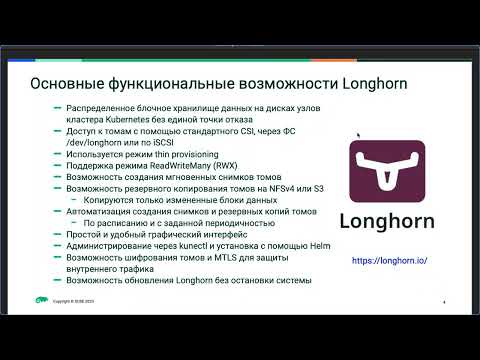
Storage in Kubernetes is hard, complicated, and messy. Configuring volumes, mounts, and persistent volumes claims and getting it right can be a challenge. It's also challenging to manage that storage and replicate it across all your Kubernetes clusters. It's also been very challenging to do this on bare metal, outside of a cloud provider. That's where Longhorn comes. Longhorn is an open source, a CNCF distributed block storage system for Kubernetes. It comes with a UI, backups, snapshots, and cluster disaster recovery and it does all this with or without Rancher. Rancher is NOT a requirement. * sorry for the audio issues, still tuning new mic. Video Notes: Support me on Patreon: Sponsor me on GitHub: Subscribe on Twitch: Become a YouTube member: Merch Shop 🛍️: Gear Recommendations: Get Help in Our Discord Community: 2nd channel: @TechnoTimTalks (Affiliate links may be included in this description. I may receive a small commission at no cost to you.) 00:00 - Intro 00:58 - Challenges with storage in Kubernetes 01:46 - What is Longhorn? 02:10 - Longhorn requirements 02:28 - How to install Longhorn on Kubernetes 05:14 - Longhorn Dashboard 05:42 - Nodes in Longhorn 07:09 - Volumes in Longhorn 07:30 - Longhorn Settings - S3 with Longhorn 09:33 - NFS with Longhorn 10:21 - Taints for Longhorn to dedicate storage nodes 10:52 - Disable nodes for storage jobs 11:21 - Create a Wordpress workload with a persistent volume 12:59 - Check longhorn replicas and PVC creation 13:50 - Testing our persistent volume claim 15:41 - Longhorn snapshots 16:10 - Longhorn backups 17:18 - Scheduling backups with Longhorn 18:11 - What is your kubernetes storage solution? 18:41 - Stream Highlight - "Now I need to redo all my infrastructure??" #Kubernetes #CNCF #TechnoTim Thank you for watching!
- 110973Просмотров
- 4 года назадОпубликованоTechno Tim
Cloud Native Distributed Storage in Kubernetes with Longhorn
Похожее видео








Популярное
Новини