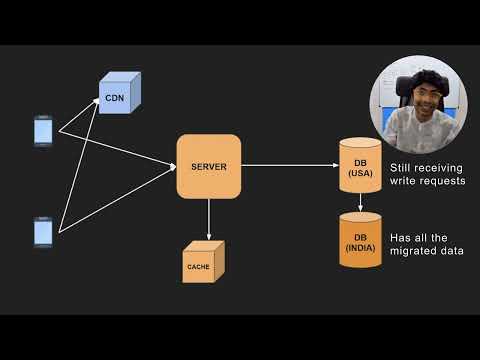
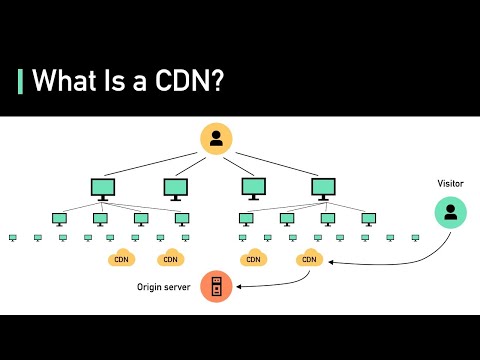
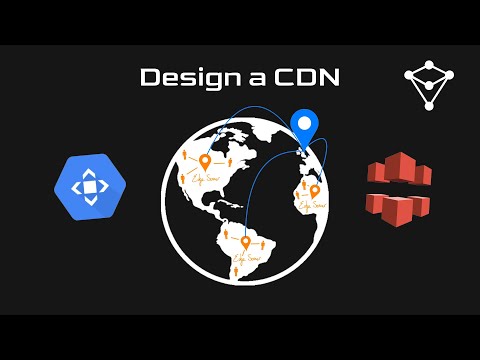
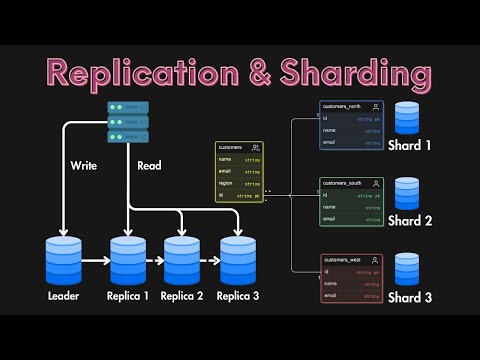
🔄AIML Lecture Series : 🔄AI Math and Programming Series : Designing scalable, reliable, and high-performance systems requires a strong understanding of the core building blocks that power modern distributed architectures. In this video, we break down the most important components of system design: Stateful vs Stateless Architecture, Load Balancers, CDN, GeoDNS, Caches, and Message Queues. Whether you're preparing for a system design interview, building scalable applications, or simply learning how large-scale platforms work, this video gives you the fundamentals with clarity and real-world intuition. We begin by comparing Stateful and Stateless architectures and understanding why stateless systems dominate at scale. From there, we explore Load Balancers, how they distribute traffic, and why they are critical for high availability. We then dive into Content Delivery Networks (CDNs) and how they reduce latency by serving content from geographically distributed edge locations. To route users intelligently across the world, we explain GeoDNS and how DNS-based load balancing provides region-aware request handling. Next, we cover Caching, one of the most powerful performance optimizations in system design. You’ll learn how caching reduces backend load, improves latency, and supports millions of users efficiently. Finally, we demystify Message Queues, the backbone of asynchronous communication in large systems. MQs help decouple services, smooth traffic spikes, and improve reliability. By the end of this video, you’ll have a complete understanding of these core components and how they work together to build scalable and resilient systems — the exact knowledge required for FAANG-level system design interviews and real-world architecture planning. 🔑 Keywords / Tags system design, system design interview, scalable systems, stateful vs stateless, load balancer, cdn, geodns, caching, message queue, distributed systems, software architecture, backend engineering, microservices, high availability, scalability, latency optimization, devops, cloud architecture 00:00 – 01:03 Initial monolithic architecture (single server design) 01:03 – 03:27 Single-server bottlenecks under load (CPU/RAM/I/O contention) 03:45 – 05:16 First scale step: split tiers (web tier + DB tier) 05:16 – 09:09 Database deep-dive: SQL vs NoSQL tradeoffs 09:31 – 12:14 Vertical vs Horizontal scaling explained 13:14 – 14:50 Load balancer introduction (round-robin, least connections, failover) 15:33 – 18:28 Master–slave (primary–replica) DB replication & consistency models 19:11 – 22:41 Caching layer: Redis/Memcached, eviction, invalidation, stale data 23:03 – 25:34 Content Delivery Network (CDN) for static assets 26:09 – 42:20 Final architecture: stateless web tier, redundancy, queues, sharding, observability 🔔 Subscribe to the channel and turn on notifications so you never miss a new lesson! 👨💻 Who is this channel for? Aspiring Data Scientists & ML Engineers: Solidify the core mathematical intuition that interviews and real-world projects demand. Students: Struggling to see the connection between your linear algebra class and your AI ambitions? We make it crystal clear. Curious Developers: You can import a library, but do you know what’s happening inside? Level up from a coder to a true creator. Anyone Fascinated by AI: If you want to move beyond being a user of technology and become someone who understands it, this is your starting point. #MachineLearning #Mathematics #ArtificialIntelligence #LinearAlgebra #Calculus #DeepLearning #DataScience #Tutorial #KNN #Regression #Classification #Python #AI #LearnToCode #TechEducation
- 116Просмотров
- 2 недели назадОпубликованоAi Guru
Scale to 1 Million Users: System Design Step-by-Step - From Stateless Apps to Global CDNs
Похожее видео







Популярное
Новини