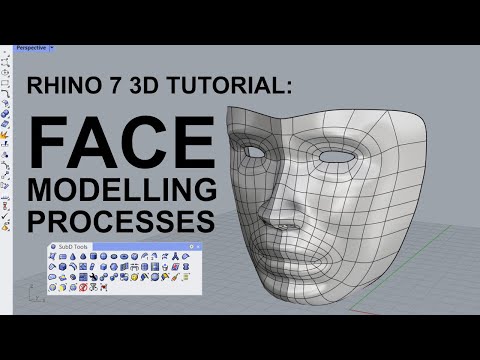
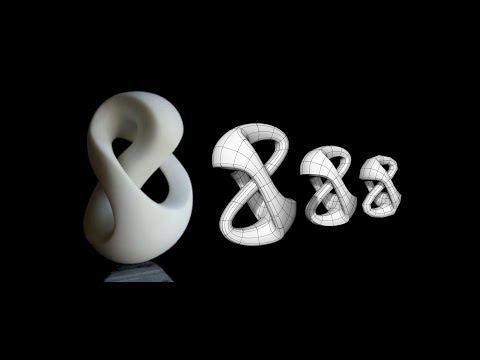
#rhino3d #subd #3dtutorial #3dmodeling #symmetrymodelling #organicforming This is an Introduction to Rhino 3D's SubD or Subdivision Modelling. It briefly explains the various method that SubD can be produced within Rhinoceros CAD. This is useful for organic and freeform modelling. Note:To display language subtitle, turn on CC and set language setting. Includes Chinese subtitle 提示:若要显示语言字幕,请打开CC,并设置语言选项。其教程包括中文字幕。 Subdivision modeling is a technique used in 3D modeling to create organic shapes with smooth surfaces. Rhino 3D CAD is a popular software for subdivision modeling, and while it has many benefits, it also has some drawbacks. Here are some pros and cons of subdivision modeling using Rhino 3D CAD: Pros: Creates smooth and organic shapes: Subdivision modeling allows you to create complex and organic shapes with smooth surfaces that are difficult to achieve with traditional modeling techniques. Easy to learn: Rhino 3D CAD is a user-friendly software that is easy to learn and use, even for beginners. Fast and efficient workflow: Subdivision modeling in Rhino 3D CAD allows you to quickly create and modify your models, saving you time and increasing your efficiency. Flexible and versatile: Rhino 3D CAD offers a wide range of tools and features that allow you to create a variety of models, from simple to complex. Cons: Limited precision: Subdivision modeling in Rhino 3D CAD can be imprecise, making it difficult to achieve exact measurements and dimensions. Steep learning curve for advanced features: While Rhino 3D CAD is easy to learn for basic features, it can be challenging to master more advanced features, such as creating complex surface networks. Limited control over geometry: With subdivision modeling, you have limited control over the geometry of your model, which can make it difficult to achieve specific shapes and structures. This video also talks about Symmetry modelling. Symmetry modeling in subdivision 3D modeling is the technique of creating a model with a symmetrical design, where one half of the model is mirrored to create the other half. This technique is often used in character modeling, vehicle design, and other types of 3D modeling where symmetry is important. To create a symmetrical model in subdivision 3D modeling, the model is typically created as a single half, with the center line serving as the axis of symmetry. The half is then duplicated, mirrored, and merged with the original to create the full model. Generally, the benefit of using symmetry modeling is that it can save time and effort when creating models that require a high level of symmetry, as only one half of the model needs to be created manually.
- 21010Просмотров
- 2 года назадОпубликованоPC Sim
Rhino 3D Organic Tutorial: Introduction to SubD or Subdivision Modelling 【犀牛3D教程:SubD或细分建模入门】
Похожее видео
Популярное
Новини