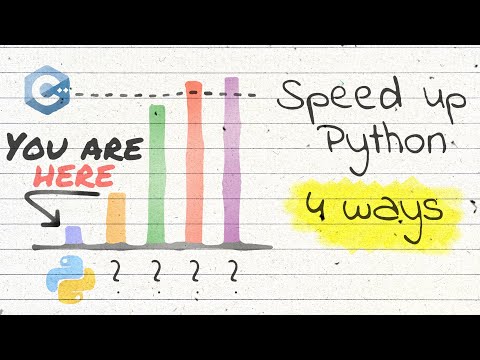
In this tutorial, we explore how to make fuzzy autocomplete in Python. First using libraries like `fuzzywuzzy`, then from scratch using Levenshtein distance and the Wagner-Fischer algorithm. Finally, we look at how we can get C/C++ level of performance with Python using vectorization and NumPy. For production use, definitely prefer one of the libraries mentioned at the beginning :) If you're interested in text processing, dynamic programming, and making Python programs run fast, I hope you'll find the video useful. Let me know in the comments what tutorial you'd like to see next! 🔴 SOURCE CODE 👇 ◼️ TIMESTAMPS 🕑 00:00 Intro 00:41 Example: Fuzzy autocomplete with "rapidfuzz" 01:27 Libraries for fuzzy matching in Python 03:01 String similarity measures 04:07 Hamming distance explained 05:17 Hamming distance, implementation 05:47 Levenshtein distance explained 07:32 Levenshtein distance, implementation 08:26 Wagner-Fischer algorithm explained 13:40 Wagner-Fischer performance in Python 14:47 How to optimize it? Cython/Numba vs. vectorization 15:13 Vectorization of Wagner-Fischer algorithm 17:14 Example: Fuzzy autocomplete with vectorized Wagner-Fischer 17:53 Comparison with C implementation 18:20 Outro ◼️ REFERENCES 📚 %E2%80%93Fischer_algorithm ◼️ TOPICS 🎓 #ProgrammingTutorial #TextSearch #BigPython #Python ◼️ CREDITS 🙏 Icons made by Freepik from
- 19266Просмотров
- 4 года назадОпубликованоBig Python
How Fuzzy Text Search Works
Похожее видео







Популярное
Новини