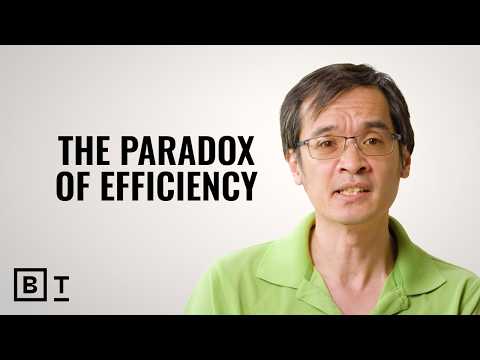
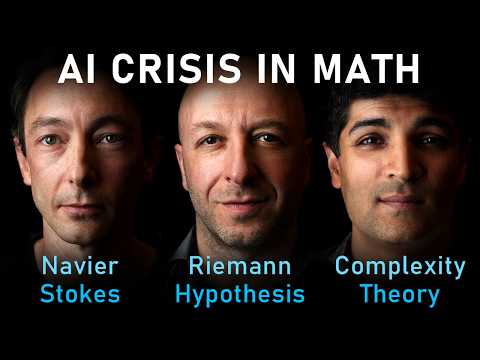
Become a Big Think member to unlock expert classes, premium print issues, exclusive events and more: Subscribe to Big Think on YouTube ► Up next, Sean Carroll explains the biggest ideas in the universe | Full Interview ► Terence Tao has spent decades solving problems most people can't even state, and he says he's never had a single eureka moment. In this conversation, the UCLA mathematician and Fields Medalist breaks math down to six essential ideas: numbers, algebra, geometry, probability, analysis, and dynamics. 0:00 Chapter 1: The 6 essential elements of mathematics 1:14 Numbers: The oldest invention still in use 5:56 Algebra: the rules behind the rules 11:39 Geometry: How the Greeks measured the moon 13:30 Probability: Betting on uncertainty 17:00 Analysis: Taming infinity 24:07 Dynamics: The math of change 32:12 Chapter 2: How math solves the problems of science 34:30 Three discoveries that changed the world 48:17 Why math works and how it’s really done 54:29 Chapter 3: How AI is changing math and science forever 1:07:38 Why faster isn’t always better 1:15:18 What AI can do now and what’s at stake Read the video transcript ► © Freethink Media Inc., All Rights Reserved. ---------------------------------------------------------------------------------- Go Deeper with Big Think: ►Become a Big Think Youtube Member Get exclusive classes and early, ad-free access to new releases without leaving Youtube. @bigthink/membership/ ►Become a Big Think Web Member Get the entire Big Think Class library, premium print issues, live events, and more. ►Subscribe to Big Think on Substack Get all of your favorite Big Think content delivered to your inbox. ►Listen to Big Think Interviews on Spotify Insights from the world's biggest thinkers, now as a podcast ---------------------------------------------------------------------------------- About Terence Tao: Terence Tao was born in Adelaide, Australia, where he excelled at university-level math by age nine and became, at 13, the youngest-ever gold medalist at the International Mathematical Olympiad. He earned his PhD from Princeton at 20 and joined UCLA's mathematics faculty, becoming the university's youngest-ever tenured professor at 24. In 2006 he won the Fields Medal for contributions spanning partial differential equations, combinatorics, harmonic analysis, and additive number theory, and he remains a UCLA professor today, known for prolific, wide-ranging work including the Green–Tao theorem on prime number progressions.
- 👁️ 2.9 млн
- 📅 2 месяца назад