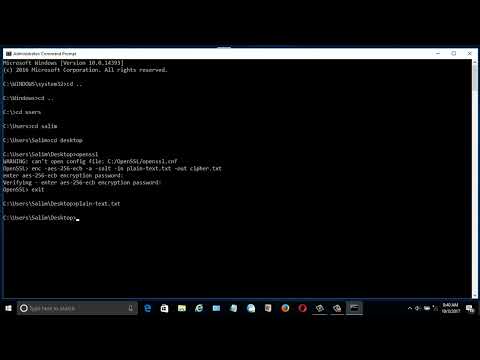
Create an Asymmetric public / private key pair with OpenSSL and a whole lot more. 🧠 Need expert help fast? Book a 1:1 session and get unstuck today 👉 🎥 NEW: Unlock members-only videos and behind-the-scenes drops 👉 🛠️ The exact tools and gear I trust (and actually use) 👉 📚 Step-by-step setup guides, templates, and insider resources 👉 🛒 Grab custom gear and tools designed by me 👉 📩 For sponsorships or business inquiries, reach out: macgyvertechnology@ Outline Intro 0:00 - 0:30 Encoding 0:30 - 2:01 Encryption 2:01 - 2:49 Symmetric Keys 2:49 - 3:14 Asymmetric Keys 3:14 - 3:51 Apps 3:51 - 4:55 OpenSSL 4:55 - 5:17 Create Keys 5:17 - 7:15 Encrypt File 7:15 - 9:40 Bit Lengths 9:40 - 10:20 Network Cost 10:20 - 12:28 Ransomware 12:28 - 12:58 SSL Certs 12:58 - 14:05 Generate a CSR 14:05 - 16:03 NGINX 16:03 - 17:01 Web3 17:01 - 17:37 CryptoJS 17:37 - 22:00 #ssl #crypto The SubtleCrypto interface of the Web Crypto API provides a number of low-level cryptographic functions. Access to the features of SubtleCrypto is obtained through the subtle property of the Crypto object you get from the crypto property. SSL certificates are what enable websites to move from HTTP to HTTPS, which is more secure. An SSL certificate is a data file hosted in a website's origin server. SSL certificates make SSL/TLS encryption possible, and they contain the website's public key and the website's identity, along with related information. Devices attempting to communicate with the origin server will reference this file to obtain the public key and verify the server's identity. The private key is kept secret and secure. What is SSL? SSL, more commonly called TLS, is a protocol for encrypting Internet traffic and verifying server identity. Any website with an HTTPS web address uses SSL/TLS. See What is SSL? and What is TLS? to learn more.
- 8241Просмотров
- 3 года назадОпубликованоData Slayer
How To Create an Public Private Key Pair with OpenSSL
Похожее видео








Популярное
Новини