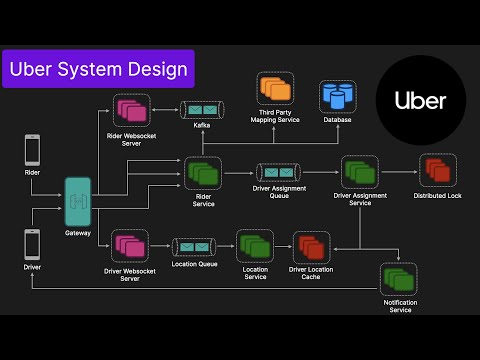
Fulfillment Platform Rearchitecture → Building Uber’s Fulfillment Platform → Cloud Spanner → How does Uber scale millions of concurrent requests for rides and food deliveries while keeping costs under control? In this episode of Architecting with Google Cloud, Priyanka Vergadia interviews Ankit Srivastava, Senior Staff Engineer at Uber, on how to get a ride or order food with the “simple” press of a button. Watch to learn how Ankit Srivastava and the Uber team led the ground-up redesign of Uber’s fulfillment platform leveraging Cloud Spanner. Chapters: 0:00 - Intro 1:00 - What powers the simple user experience at Uber? 2:40 - How does the Uber request flow work? 3:35 - Uber’s challenges with on-premises database & why they switched to Cloud Spanner 5:50 - How did Uber transition from NoSQL to NewSQL - Spanner 7:24 - In a hybrid environment, how does Uber reduce latency? 9:00 - What were the benefits of Spanner to Uber? 9:35 - How did Uber migrate to Spanner live - while we were still ordering rides and food? 11:53 - How Google team helped Uber migrate their on-premise database to Spanner. 14:30 - What were the performance optimizations done by Uber to deliver the user experience? 16:20 - How do you optimize for cost at this scale? 18:30 - Summary Ankit Srivastava’s LinkedIn → Priyanka Vergadia’s LinkedIn → Architecting with Google Cloud playlist → Subscribe to Google Cloud Tech → #ArchitectingWithGoogleCloud product: Cloud - General; fullname: Priyanka Vergadia;
- 121476Просмотров
- 3 года назадОпубликованоGoogle Cloud Tech
How does Uber scale to millions of concurrent requests?
Похожее видео











Популярное
Новини