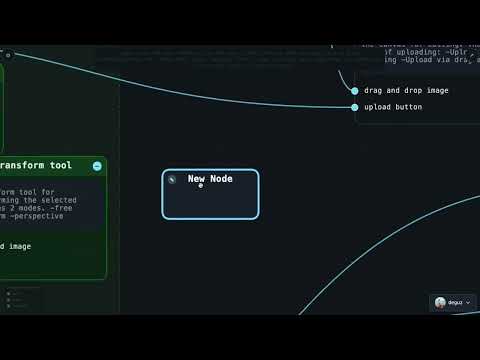
I’m the kind of person who loves planning ahead. When I start a project, I already have a full map in my head — ideas, structure, relationships, constraints, little details. And until now, I only had two ways to handle that: 1. Dump everything into one giant prompt. 2. Or hold myself back and develop in tiny pieces while taking messy notes. Both are painful. If I write everything into one big prompt, the AI struggles — not just because it’s long, but because the logic has no structure. Human language is terrible at describing a system with hierarchy, references, and flow. It becomes tangled fast. If I break it into tiny prompts, most of my mental energy goes into keeping the whole structure in my head, planning ahead, and trying not to confuse the model. It’s slow and mentally exhausting. And since I come from a background of using node-based tools (like Blender’s node graphs), one day it hit me: Why not build my system the same way? Visually. Modularly. With tiny parts to create a structure. So we built Flowcrest.
- 36Просмотров
- 1 неделя назадОпубликованоFlowcrest - Visual Vibe-Coding Aid
Flowcrest - Building an App From Start To Finish
Похожее видео








Популярное
Новини